
August 31, 2026
Data Center Construction: Part 2
This blog series explores how data center construction both parallels and differs from other commercial and industrial facility construction. The first post identified how data center construction management and scheduling are very similar to other large and complex construction projects, and this second post examines some of the differences. The next post will focus on several of the most common causes of delay claims and other construction disputes on data center projects—and best practices for avoiding them.
How Data Center Construction Is Different
As discussed in the first post, data centers are complex construction projects that, in some ways, resemble process plants. Instead of producing a physical product, they allow the transfer of information. Although they may resemble a commercial facility from the outside, inside is a vast amount of complex computer equipment—with huge electrical demands. The equipment generates significant heat, which requires cooling and associated redundancy.
A data center must be designed for continuous operation. As a result, many of the systems are designed for redundancy such that if a system fails, a backup system is in place. Below, I discuss four aspects of data centers that differentiate them from other construction projects and may present unique challenges: 1) electrical and computer systems, 2) cooling systems, 3) security systems, and 4) commissioning.
Electrical and Computer Systems
Electrical and computer systems are among the most important and expensive parts of a data center. The installation of these systems are likely to be the most time-consuming aspect of the construction. As discussed in the previous blog post, due to the high volume of computer equipment, procurement management of this equipment and deliveries must be highly coordinated between the owner (if owner supplied) and the contractor.
The electrical system in a large data center is designed to provide continuous, reliable, and redundant power to servers and networking devices. Electricity is delivered from the utility grid through high-voltage substations, stepped down through transformers, and distributed via medium- and low-voltage switchgear to uninterruptible power supplies (UPS), power distribution units (PDUs), and ultimately to the equipment racks housing the servers and network equipment.
Because data centers require continuous functionality, backup diesel generators, automatic transfer switches, and redundant electrical paths ensure that operations continue without interruption during utility outages or equipment failures. Large data centers may have dozens of backup diesel generators, along with associated fuel reserves. There can be various levels of redundancy, depending on factors such as operation needs and the project budget.
The “gold standard” for the electrical design requires that each server has two power supplies, each connected to a separate electrical system. If one system fails, the other supplies power without interruption.1 Of course, this feature comes with added cost.
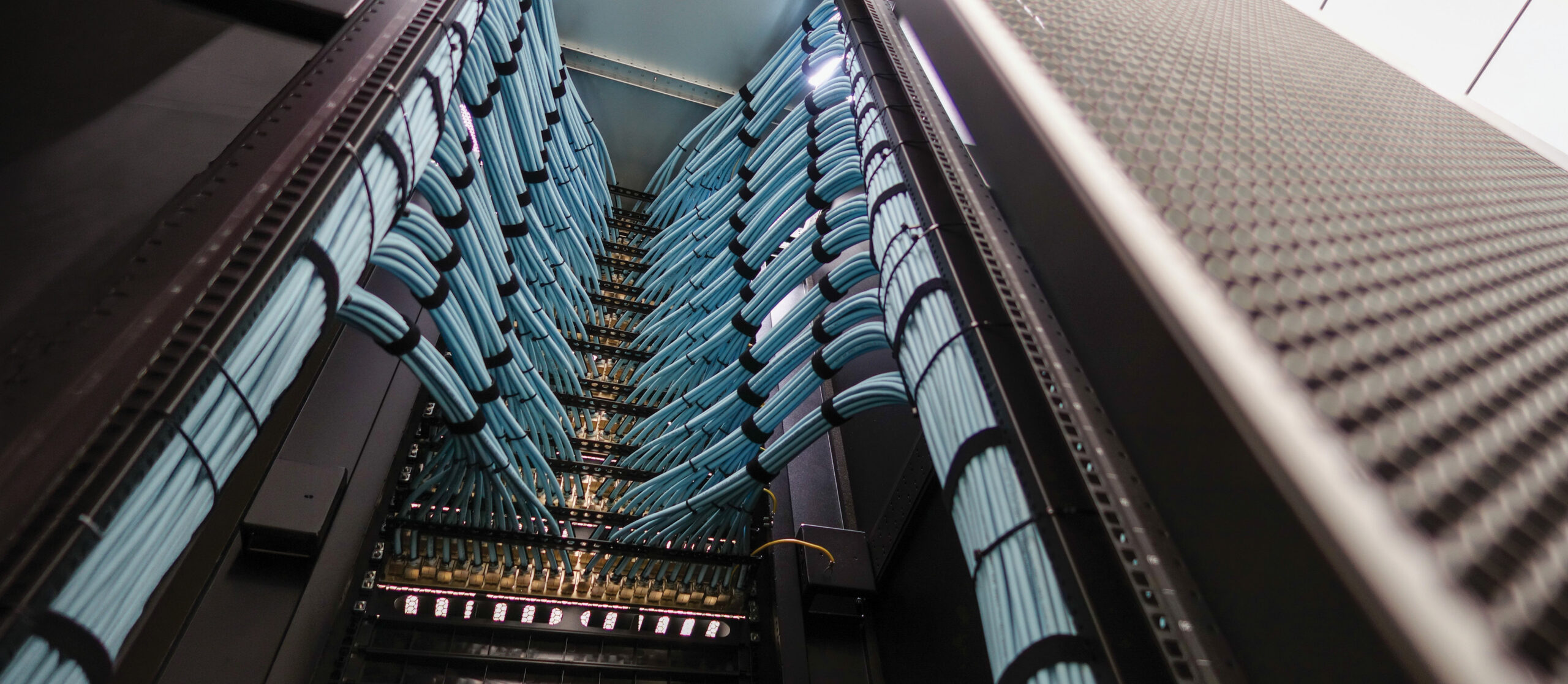
The computer systems within a data center consist of thousands to hundreds of thousands of interconnected servers (depending on the size of the data center), storage systems, and high-speed networking equipment. Together, the electrical and computer systems form the technological foundation of a data center. The electrical infrastructure delivers uninterrupted power to the hardware, while the computer systems process, store, and transmit digital information. Management of the procurement and installation of this equipment is a key aspect of successful data center construction.
Cooling Systems
Cooling systems are among the most critical components of a modern data center, alongside the electrical and information technology infrastructure. Their primary purpose is to remove the large amounts of heat generated by servers and networking equipment while maintaining environmental conditions that ensure reliable operation. Unlike conventional commercial buildings, where HVAC systems are designed primarily for occupant comfort, data center cooling systems are essential to their operation and must operate continuously.
Data center cooling systems differ significantly from those found in commercial facilities because they are designed for uninterrupted operation. Even a brief loss of cooling can cause equipment temperatures to quickly spike, leading to system failures, costly downtime, and potential damage to hardware. To reduce this risk, cooling systems are designed with redundant equipment and distribution paths so that maintenance or equipment failures do not interrupt operations. Common redundancy configurations include backup chillers, pumps, cooling towers, and air-handling equipment that can automatically assume the load if a primary component fails.
Most data centers rely on air-based cooling systems that use computer room air conditioning (CRAC) units or computer room air handler (CRAH) units to deliver conditioned air to server rooms. Airflow is carefully managed using hot aisle/cold aisle layouts,2 containment systems (separation of supply and return air), and either raised-floor or overhead air distribution to maximize cooling efficiency and prevent the mixing of hot and cold air.
Larger facilities may utilize central chilled-water plants consisting of chillers, cooling towers, pumps, and heat exchangers to remove heat from the building. As the need for data centers continues to escalate, particularly with artificial intelligence and high-performance computing applications, many new facilities may also incorporate certain liquid cooling technologies.
The construction of these cooling systems is considerably more complex than that of a typical commercial facility. Large mechanical equipment, extensive piping networks, and sophisticated control systems must be properly installed and closely coordinated with the building’s structural, electrical, and information technology infrastructure. Because cooling is essential to maintain continuous operation, construction is followed by extensive testing and commissioning to verify that the system performs reliably under both normal operating conditions and simulated equipment failures.
Security Systems
Security systems are a critical component of modern data centers, protecting both the physical infrastructure and the sensitive digital information stored within. Because these facilities support essential business operations, cloud computing, and internet services, they are designed with multiple layers of security to prevent unauthorized access, detect potential threats, and ensure continuous operation. Physical and cybersecurity measures work together to create a comprehensive defense against a wide range of risks.
Physical security begins at the perimeter of the facility and extends through increasingly secure access points to the server rooms. Typical measures include security fencing, controlled vehicle entrances, surveillance cameras, security personnel, electronic access control systems, and biometric authentication. Continuous monitoring, intrusion detection systems, and environmental sensors further protect the equipment while ensuring that only authorized personnel can access critical areas of the data center.
Cybersecurity protects the digital infrastructure that enables the data center to operate securely and reliably. Networks are safeguarded using firewalls, intrusion detection and prevention systems, encryption, identity and access management, and continuous security monitoring. Many data centers also utilize security operations centers that monitor network activity 24 hours per day, allowing security teams to quickly identify and respond to cyber threats while maintaining the availability of customer data and services.
Although process plants also have security systems, the security systems at data centers rival those of classified government facilities. These systems render the construction unique as compared to other facilities.
Commissioning
Commissioning and testing are among the most important stages of building a data center and are far more extensive than what is required for a typical commercial building. Although the equipment and testing procedures differ from those used in process plants or other industrial facilities, a similar level of planning, time, and effort is needed before a data center can begin operating.
The commissioning process verifies that every piece of equipment and system has been installed correctly and performs as intended before the data center is placed into service. The commissioning process begins with inspections, equipment startup, factory acceptance testing, calibration, and testing of individual components. Once each piece of equipment and system has been independently verified, engineers conduct systems integration testing to confirm that the electrical, cooling, backup power, and control systems all work together during both normal operation and emergency conditions.
In addition to electrical testing, every cooling system and control component is tested under a variety of operating conditions to ensure the facility can maintain safe temperatures during normal operation, equipment maintenance, and unexpected failures. Testing often includes simulated power outages and equipment failures to confirm that backup systems automatically take over without disrupting operations. This comprehensive commissioning process helps ensure the data center will provide the high level of reliability needed to support continuous and uninterrupted operation.
Commissioning a data center is a significant task and requires detailed planning and scheduling. Similar to process plants, parties often underestimate the amount of time and effort required to complete this process, which can lead to delays. In Part 3 of this blog series, I discuss how the commissioning phase can lead to delays on data center projects.
1 This is referred to as 2N design, or 2N architecture.
2 A hot aisle/cold aisle layout pertains to how the servers are positioned. In the cold aisle, the front side of the server racks face each other, and the air conditioning units push cool air into these aisles and the server racks pull this air into their front vents. In the hot aisles, the back sides of the server racks face each other, and the servers blow the hot exhaust into these rows and heat is then directed back to the cooling units.
ADDITIONAL RESOURCES

Blog
Discover industry insights on construction disputes and claims, project management, risk analysis, and more.
MORE

Articles
Articles by our engineering and construction claims experts cover topics ranging from acceleration to why claims occur.
MORE

Publications
We are committed to sharing industry knowledge through publication of our books and presentations.
MORE
RECOMMENDED READS
The Role and Benefit of a Consultant in a Construction Project: Part 1
This is the first blog post in a two-part series on the role and benefit of a construction consultant.
READ
A Tale of Two Claims: Same Contract, Two Fates
The success of a claim often hinges not on what happened in the field, but how it was documented, analyzed, and communicated.
READ
Construction Claims Prevention and Resolution
This article identifies solutions and suggests programs that one can use to prevent, mitigate, and manage claims.
READ